

Middle Market Investment Banking Firm in Missouri
ButcherJoseph & Co. is a boutique investment bank serving privately held middle market companies across Missouri and nationwide, advising founders, families, and employee-owned businesses through ownership succession, M&A transactions, capital raises, and ESOP structures. If you are weighing what comes next for your business, whether that means a full exit, a partial liquidity event, or a transition to employee ownership, we help you evaluate every path and execute the right one.

What Middle Market Investment Banking Involves
Middle market investment banking is the advisory discipline focused on ownership transactions for privately held companies, typically those with $20mn+ in revenue and $1mn+ in EBITDA, where the stakes are personal, not just financial. Unlike publicly traded companies with institutional shareholders and active trading markets, middle market owners face a one-time liquidity event that touches their legacy, their employees, and their financial future simultaneously. The right banker structures the deal that works across all three dimensions, not just the one that closes fastest.
At ButcherJoseph & Co., we deliver that advisory across the full spectrum: sell-side M&A, ESOP advisory, capital raises, business valuations, and fairness opinions. Our firm has completed 200+ deals, including $30bn in M&A transactions and $10bn in ESOP transactions across 50+ deals, which gives us pattern recognition across industries and deal structures. For Missouri owners, timing matters: demographic shifts, tax environment changes, and evolving buyer appetite all create windows that open and close. Understanding where you stand today is the first step toward acting when the moment is right.
Who This Service Is For
How ButcherJoseph's Investment Banking Process Works
Every engagement follows a deliberate sequence designed to protect the owner’s interests at each stage, not just at the closing table.
Feasibility & Discovery
We assess your business profile, ownership objectives, financial performance, and timeline. This determines which transaction structures are viable and rules out unsuitable options early, before significant capital or time is invested.
Valuation & Positioning
We develop an independent business valuation and identify the positioning narrative that will resonate with the right buyers or capital sources. How your business is presented in the market can shape how buyers value it.
Market Outreach & Structuring
For M&A engagements, we run a disciplined, confidential process to reach qualified buyers through our proprietary network. For ESOP transactions, we structure the financing, define the trust, and coordinate with ESOP legal counsel and independent trustees. Both paths require precision at this stage.
Negotiation & Due Diligence
We represent your interests through letter of intent negotiations, purchase agreement terms, and due diligence. Our role here is to protect the value you have established, work to limit erosion from late-stage renegotiation, and keep the process moving without conceding ground that matters.
Closing & Transition
We manage the final steps through closing, including lender coordination, third-party provider management, and post-close planning considerations. The transaction closes; the relationship continues.
Not Sure What Your Business Is Worth?
Find out where you stand before committing to any path. Most owners are surprised by how many options they actually have once they see the numbers.
Key Considerations in Middle Market Investment Banking
What drives the valuation of my business?
Valuation in a middle market transaction reflects EBITDA, revenue quality, customer concentration, management depth, and growth trajectory. Buyers and ESOP trustees apply different methodologies, so the same business may be valued differently depending on the transaction structure. Understanding this spread before going to market is essential.
How does deal financing affect my outcome?
Most middle market transactions involve some combination of senior debt, seller notes, and equity. In an ESOP, the trust typically borrows to purchase shares, with the loan repaid through future company cash flows. In a third-party sale, buyer financing affects deal certainty and timing. The financing structure shapes how much you receive at closing versus over time, and under what conditions.
Should I pursue a full sale or partial transaction?
A full sale maximizes immediate liquidity but ends your ownership. A partial transaction (recapitalization, partial ESOP, or minority sale) can provide liquidity while preserving some upside and operational continuity. The right answer depends on your financial needs, your timeline, and what role, if any, you want to play after the transaction.
What are the tax implications of different deal structures?
Transaction structure significantly affects tax treatment. S-corporations are pass-through entities, and the ESOP trust’s share of an S-corporation’s earnings is exempt from Unrelated Business Income Tax (UBIT). That benefit scales directly with the percentage of stock the ESOP trust owns and is complete only at 100% ESOP ownership. For C-corporation selling shareholders, Section 1042 may allow capital gains deferral if the ESOP owns at least 30% of each class or of the total value of outstanding stock immediately after the sale and the proceeds are reinvested in Qualified Replacement Property within the statutory window (3 months before to 12 months after the sale). Every situation is different, and tax outcomes depend on structure, timing, and individual circumstances. Owners should work with qualified tax counsel before committing to a path.
Selected ESOP and M&A Transactions
Employee ownership transactions we have advised across construction, industrial, distribution, healthcare and business services.






Recent Middle Market Investment Transaction
American Metals Supply Co., Inc.
Family-led wholesale distributor founded in 1962, sold to MacArthur Company, an employee-owned building products distributor. We were exclusive financial advisor.
“This transaction represents an important milestone for Andesa. Andesa thanks ButcherJoseph for their trusted partnership, outstanding expertise, and high-impact support throughout this transaction”
Meet Your Investment Banking Advisor
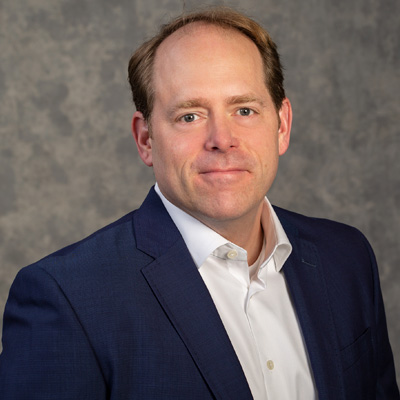
As Managing Partner at ButcherJoseph, Keith helps business owners with sale transactions to strategic or financial buyers and ESOP advisory work. He advised on more than 150 transactions as an investment banker and attorney, practicing ESOP-focused employee benefits law before joining Morgan Stanley, and co-founded the firm in 2011.
FAQs — Middle Market Investment Banking Firm
How long does a middle-market investment banking transaction typically take?
Timelines vary with the transaction type, buyer process, due diligence complexity and financing. ESOP and M&A transactions follow similar stages, though the feasibility and structuring phase often adds time upfront for an ESOP. Owners who start planning earlier have more control over pace.
Is my company the right size and profile for this type of advisory?
Our target client is a privately held company with $20mn+ in revenue, $1mn+ in EBITDA and a stable workforce with predictable cash flows. Company type matters less than ownership clarity, financial documentation, and a defined objective. If you are unsure whether your business qualifies, the feasibility study is the right starting point.
What is the difference between an ESOP and a third-party sale?
A third-party sale transfers ownership to an outside buyer, usually providing full liquidity at closing. An ESOP sells shares to a trust that holds them on behalf of employees, often with seller financing and potential tax advantages for qualifying structures. Each carries different implications for speed, liquidity, control, and culture, and neither is right for every situation.
How confidential is the process?
Confidentiality is foundational to how we work. We manage buyer outreach through non-disclosure agreements and control the flow of information throughout the process. Your employees, customers, and competitors do not need to know a transaction is underway until the appropriate time.
What industries do you serve in Missouri and nationally?
We advise multiple industries across business services, construction and engineering, distribution, healthcare, industrials, and transportation and logistics, among others. Industry experience matters because buyer pools, valuation benchmarks, and deal structures vary significantly across sectors.
What does it cost to work with a middle market investment banker?
Fee structure depends on the engagement type and the size and complexity of the transaction. We discuss fees transparently at the outset, and a feasibility study is the right first step to understand whether and how an engagement makes sense for your situation.
Ready to understand what your business is worth? Request a Feasibility Study
Request A Feasibility Analysis
Tell us a little about the company and what you are trying to accomplish. A ButcherJoseph banker will follow up within one business day.